






U.S. spot Bitcoin ETFs experienced nearly $4 billion in net outflows during June 2026, marking their worst month since launch as institutional investors reduced exposure amid macroeconomic uncertainty.
U.S. Spot Bitcoin ETFs Suffer Record Monthly Outflows
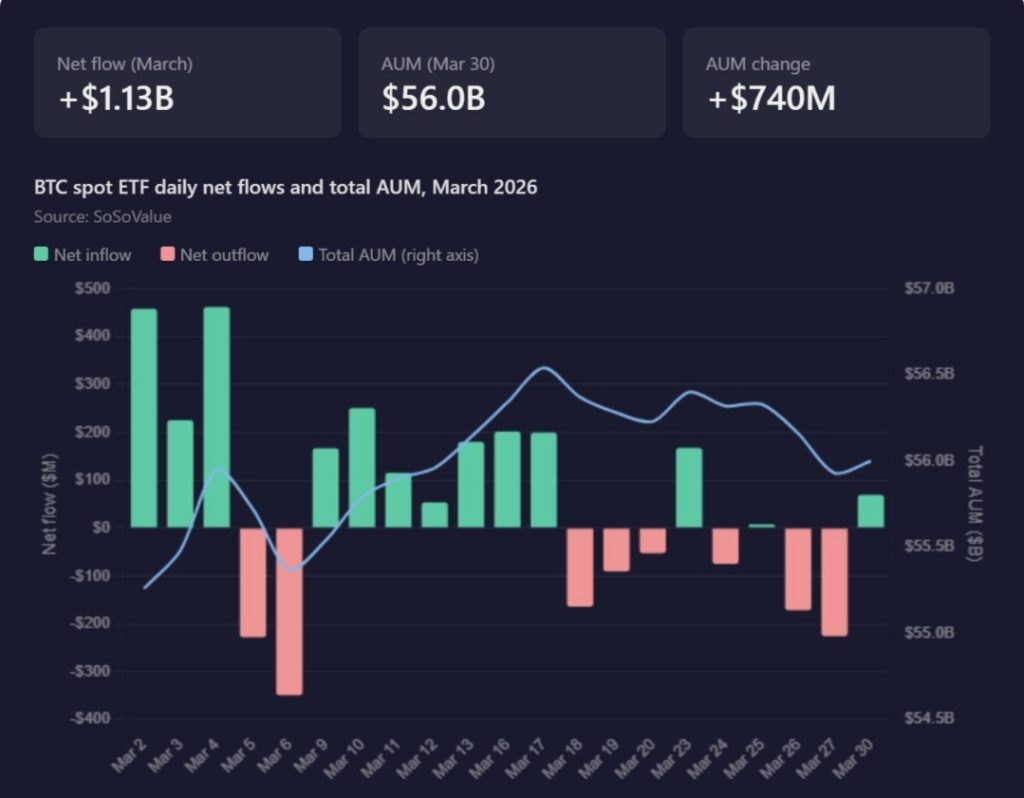
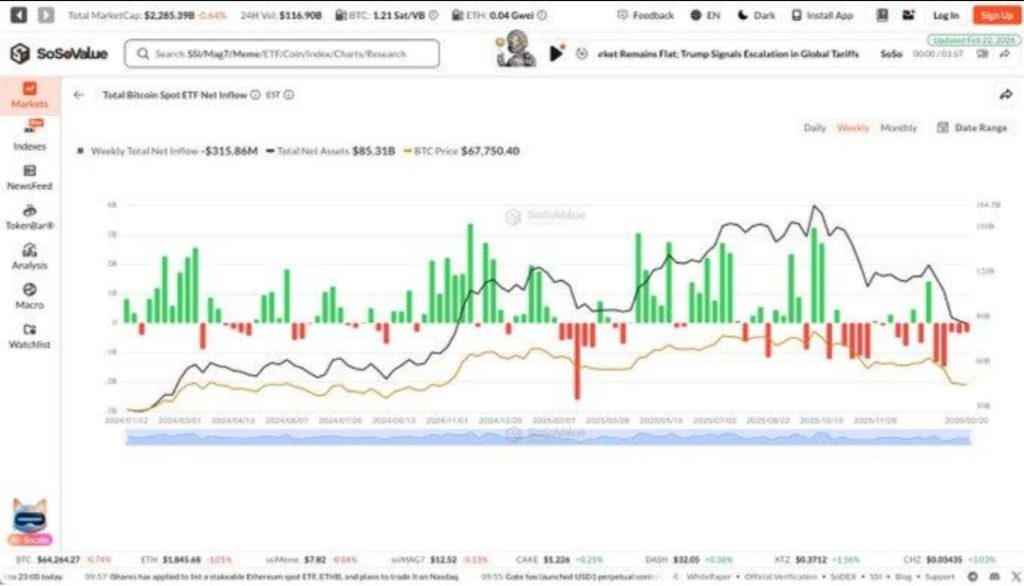
U.S. spot Bitcoin exchange-traded funds (ETFs) recorded approximately $4.06 billion in net outflows during June 2026, making it the largest monthly withdrawal since the products debuted in January 2024. The sharp decline reflects weakening institutional demand as Bitcoin continued to trade below key psychological levels. Data from market tracker SoSoValue shows June’s net outflow exceeded all previous monthly records, with total assets across the ETF sector falling to roughly $72.8 billion by month-end. Bitcoin was trading near $59,750 as investors continued to reduce exposure to the asset.
Institutional Investors Turn Risk-Off
Analysts attribute the heavy withdrawals to a combination of macroeconomic pressures, including expectations that the U.S. Federal Reserve will keep interest rates higher for longer, along with investors rotating capital toward artificial intelligence and technology-related investments.
Bitcoin has increasingly traded like a risk asset, making ETF demand highly sensitive to changes in interest-rate expectations and broader market sentiment. Reuters reported that investors have shifted significant capital toward AI-related companies while crypto investment products experienced sustained selling pressure.
ETF Flows Continue to Influence Bitcoin Price
Since the approval of U.S. spot Bitcoin ETFs, institutional fund flows have become one of the strongest short-term drivers of Bitcoin’s price.
Market analysts estimate ETF activity now explains a significant portion of Bitcoin’s weekly price movements. Large-scale redemptions force ETF issuers to sell Bitcoin held in reserve, increasing selling pressure on the spot market and weighing on prices.
Long-Term Outlook Remains Divided
Despite June’s record outflows, several market strategists believe the current weakness could prove temporary if macroeconomic conditions improve or interest-rate expectations shift.
Some analysts continue to argue that institutional demand could recover once monetary policy becomes more supportive, while others warn that additional volatility remains possible if ETF redemptions persist.
Why It Matters
The record June outflows underscore how important institutional investment has become to Bitcoin’s market structure. While ETFs dramatically expanded access to Bitcoin for traditional investors, they have also made the cryptocurrency more sensitive to changes in macroeconomic conditions and investor sentiment. Whether ETF flows stabilize in the coming months may play a crucial role in determining Bitcoin’s next major price trend.
