





Bernstein has reiterated its Outperform rating on TeraWulf with a $36 price target after the company’s Q2 HPC revenue reached $32 million, highlighting growing momentum in its AI infrastructure strategy.
Bernstein Reaffirms Outperform Rating on TeraWulf as AI Business Gains Momentum
TeraWulf’s AI Strategy Draws Fresh Wall Street Support
Bernstein has reaffirmed its Outperform rating on TeraWulf, maintaining a $36 price target after the company reported $32 million in second-quarter high-performance computing (HPC) revenue, signaling that its expansion into artificial intelligence infrastructure is beginning to deliver meaningful financial results.
The reaffirmation underscores growing investor confidence that TeraWulf’s strategy of diversifying beyond Bitcoin mining into AI-focused computing services could unlock a new phase of long-term growth.
What Happened
Investment research firm Bernstein reiterated its bullish stance on TeraWulf after reviewing the company’s second-quarter performance.
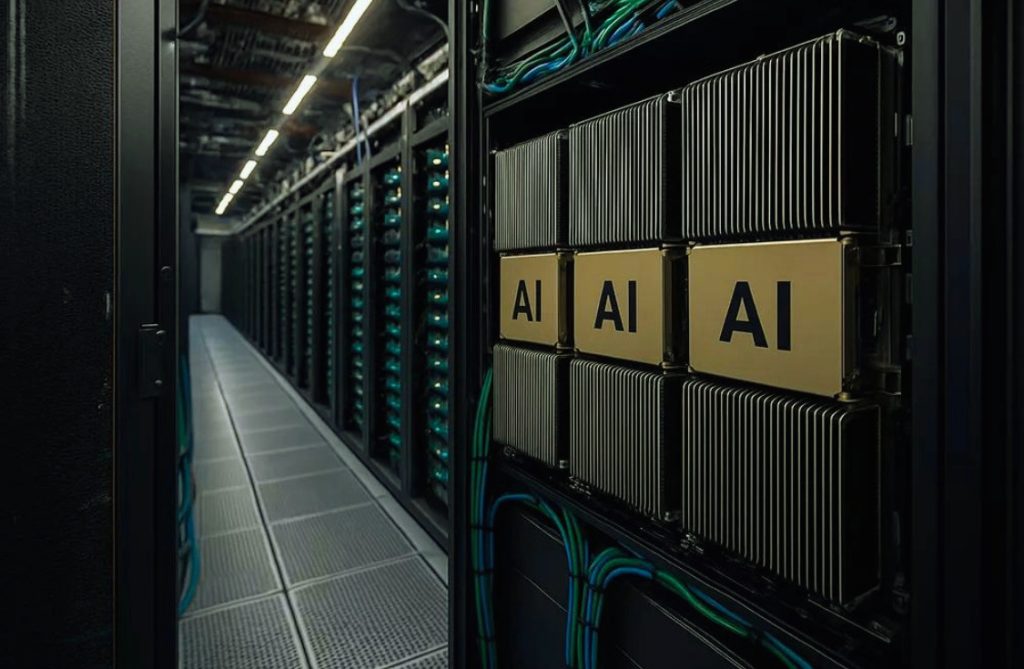
A key highlight was the company’s $32 million in HPC revenue, reflecting increasing demand for AI computing capacity. The result suggests TeraWulf’s investment in AI infrastructure is becoming an important contributor alongside its traditional Bitcoin mining operations.
Bernstein maintained its $36 price target, indicating that analysts continue to see meaningful upside if the company’s AI business continues to expand.
Why It Happened
The AI industry continues to experience unprecedented demand for computing power as companies deploy increasingly complex large language models and generative AI applications.
Rather than relying solely on cryptocurrency mining revenue, TeraWulf has been investing in infrastructure capable of supporting AI workloads.
Several factors have supported the transition:
- Rising enterprise demand for GPU computing.
- Continued investment in AI infrastructure across technology companies.
- Existing access to large-scale power infrastructure.
- Diversification away from Bitcoin price volatility.
For Bitcoin miners, AI hosting has emerged as one of the industry’s fastest-growing opportunities because many operators already own energy-intensive facilities that can be adapted for AI computing.
Who Is Affected
The development has implications for several groups.
Investors
Shareholders may view the analyst reaffirmation as validation that TeraWulf’s diversification strategy is gaining traction.
Bitcoin Mining Industry
Other publicly traded mining companies are closely watching AI infrastructure opportunities as they seek new revenue streams following Bitcoin’s latest halving cycle.
AI Infrastructure Customers
Businesses requiring high-performance computing capacity could benefit from additional data-center providers entering the market, increasing available computing resources.
Market Reaction
Analyst reaffirmations often strengthen investor confidence, particularly when accompanied by improving financial performance.
Although a price target does not guarantee future performance, maintaining a $36 target signals Bernstein believes current valuations may not fully reflect the company’s long-term AI potential.
Market participants will continue monitoring whether future earnings reports demonstrate sustained growth in AI-related revenue.
Expert Opinions
Bernstein’s reaffirmed Outperform rating reflects confidence in TeraWulf’s strategic direction rather than simply its exposure to cryptocurrency markets.
Across Wall Street, analysts have increasingly focused on the transformation occurring within digital asset mining companies. Several research firms have noted that AI infrastructure could become an important driver of future earnings for miners with access to low-cost electricity and scalable data-center capacity.
However, analysts generally caution that execution remains critical, as AI infrastructure projects require substantial capital investment and long-term customer commitments.
Why This Matters
AI May Reshape the Bitcoin Mining Industry
The growing intersection between cryptocurrency infrastructure and artificial intelligence represents one of the industry’s most significant strategic shifts.
Historically, mining companies depended almost entirely on Bitcoin prices and mining economics. Today, many operators are attempting to create diversified businesses capable of generating recurring revenue from AI computing services.
If successful, this model could reduce earnings volatility and improve long-term valuations.
Risks
Despite growing optimism, investors should remain aware of several risks.
Execution Risk
Building and operating AI infrastructure requires significant expertise and capital investment.
Customer Concentration
Large AI contracts may depend on a limited number of enterprise clients.
Capital Expenditures
Expanding AI capacity can require billions of dollars in infrastructure spending across the industry.
Competitive Pressure
Traditional data-center operators and cloud providers remain formidable competitors in the AI infrastructure market.
Cryptocurrency Exposure
Although diversification is increasing, TeraWulf still maintains exposure to Bitcoin market conditions.
What Investors Should Watch Next
Several developments could determine whether TeraWulf’s momentum continues.
Growth in HPC Revenue
Investors will watch whether AI-related revenue continues increasing over future quarters.
New Customer Agreements
Large enterprise AI contracts would strengthen confidence in the company’s long-term strategy.
Data Center Expansion
Announcements regarding additional computing capacity or infrastructure investments could signal future growth.
Profitability
Markets will closely monitor whether expanding AI operations improve margins and overall earnings.
Bitcoin Market Conditions
Although AI is becoming increasingly important, Bitcoin prices remain a significant factor in the company’s financial performance.
Conclusion
Bernstein’s decision to maintain its Outperform rating and $36 price target reflects growing confidence that TeraWulf’s pivot toward AI infrastructure is beginning to generate measurable results. With $32 million in second-quarter HPC revenue, the company is demonstrating progress in diversifying beyond Bitcoin mining.
Whether that strategy ultimately delivers sustained shareholder value will depend on continued execution, customer growth, and the broader demand for AI computing infrastructure in the coming quarters.