





The U.S. government reportedly moved 24.4 BTC worth about $1.9 million to a new wallet, drawing attention from crypto analysts and Bitcoin watchers.

U.S. government-linked Bitcoin transfers continue to attract attention as blockchain analysts track the movement of federally controlled BTC.
Key Takeaways
The movement comes as investors continue watching how Washington manages Bitcoin held through seizures and the country’s Strategic Bitcoin Reserve.
The U.S. government reportedly moved 24.4 BTC worth approximately $1.9 million to a new Bitcoin wallet.
The movement was attributed to Galaxy Research, according to reports circulating in the crypto market.
A wallet transfer does not automatically mean the Bitcoin has been sold.
The transaction is attracting attention because the U.S. government is one of the largest known Bitcoin holders.
U.S. Government Bitcoin Transfer Draws Attention
The U.S. government has once again attracted attention from the cryptocurrency market after reportedly moving 24.4 Bitcoin worth roughly $1.9 million to a new wallet, according to information attributed to Galaxy Research. The transaction was highlighted by crypto market watchers as blockchain analysts continued tracking movements involving wallets associated with the U.S. government.
The relatively small size of the transfer compared with the government’s overall Bitcoin holdings does not make it insignificant. Government-controlled Bitcoin movements are closely watched because blockchain transactions are publicly visible, allowing analysts to follow the movement of assets even when the government does not immediately explain the purpose of a transfer.
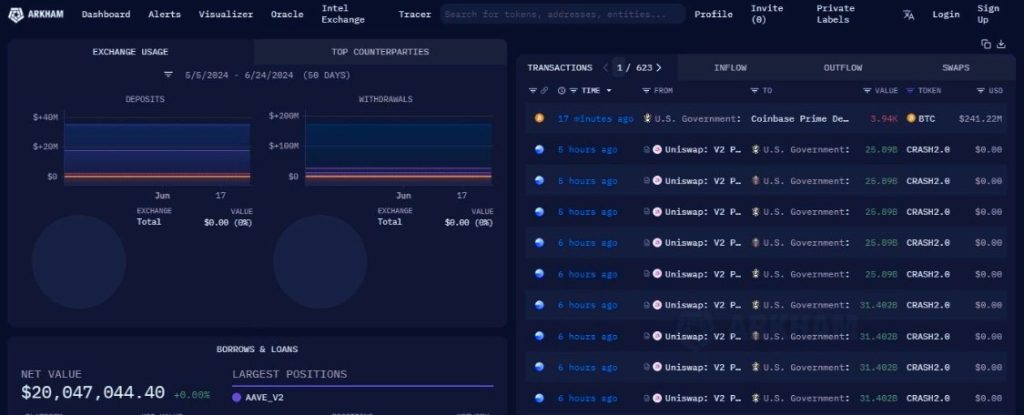
Blockchain transaction interface showing Bitcoin wallet activity.
What Happened to the 24.4 BTC?
The reported transaction involved approximately 24.4 BTC, with the coins valued at about $1.9 million at the time of the report. The Bitcoin was moved to a new wallet rather than being publicly identified as having been sold on an exchange.
That distinction is important. Moving Bitcoin from one wallet to another does not by itself establish that the government intends to sell the assets. Government-controlled cryptocurrency can be transferred for custody arrangements, security purposes, wallet consolidation, administrative reasons or other forms of asset management.
The U.S. government has previously moved large amounts of seized cryptocurrency between wallets and institutional platforms. In July, for example, Arkham reported that government-linked wallets transferred hundreds of millions of dollars worth of seized Bitcoin and Ethereum to Coinbase Prime, although analysts noted that the movements did not by themselves prove an imminent sale.
Why the Transfer Matters
The latest movement is significant mainly because of who controls the Bitcoin. The U.S. government is one of the world’s largest known government holders of Bitcoin, with Arkham estimating its holdings at around 325,000 BTC in August 2026. Those holdings largely originated from cryptocurrency seizures connected to criminal investigations and forfeiture proceedings.
This makes even relatively small wallet movements worth monitoring. Traders and analysts often examine government transactions for clues about whether assets are being consolidated, transferred into long-term custody or potentially prepared for another stage of management.
Still, investors should avoid automatically interpreting every government wallet movement as a bearish signal. A transfer to a new address is simply an on-chain movement until additional evidence establishes what happened afterward.
U.S. Bitcoin Reserve Adds Context
The movement also comes against the backdrop of America’s Strategic Bitcoin Reserve. In March 2025, the White House announced an executive order establishing the reserve and said it would be capitalized with Bitcoin already owned by the Treasury through criminal or civil asset forfeiture proceedings. The order also stated that Bitcoin placed into the reserve would not be sold.
That policy has made government Bitcoin movements particularly sensitive for the cryptocurrency market. Whenever government-controlled BTC moves, traders naturally question whether the transaction represents routine custody management or something more significant.
However, not every Bitcoin controlled by a federal agency necessarily moves directly into the Strategic Bitcoin Reserve at the same time. Different agencies and forfeiture cases can involve separate custody arrangements, meaning analysts generally need to examine the specific wallet and transaction history before drawing conclusions.
Could the Bitcoin Be Sold?
At this stage, the reported transfer does not prove a sale.
Bitcoin sales normally involve additional on-chain activity, such as transfers to an exchange or institutional trading platform. In previous cases, government-controlled Bitcoin has been moved through intermediary wallets before reaching Coinbase Prime, which supports institutional custody and trading services. Even those larger movements were not sufficient on their own to establish that a sale had occurred.
For the 24.4 BTC transfer, the more important development will therefore be what happens next. If the receiving wallet remains inactive, the transaction could simply represent a custody or administrative move. If the Bitcoin is subsequently sent to an exchange-associated address, market observers may pay much closer attention.
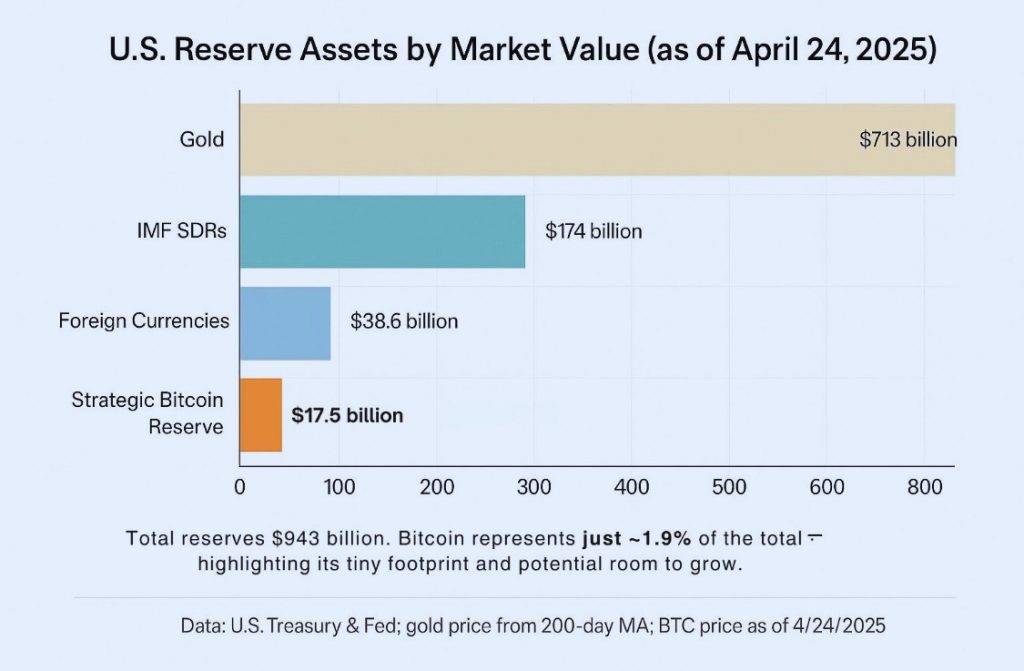
The U.S. Strategic Bitcoin Reserve has made government-controlled BTC a major focus for cryptocurrency investors.
Bitcoin Market Watches Government Wallets
Government Bitcoin movements have become increasingly relevant as institutional adoption and sovereign cryptocurrency strategies develop. The U.S. government’s holdings are large enough that major transfers can generate speculation about potential market supply, even when the actual amount moved is relatively small.
At the same time, blockchain transparency provides an important advantage for market participants. Anyone can monitor Bitcoin transactions and examine whether funds remain in a wallet, move to another government-controlled address or eventually reach an exchange.
For now, the reported 24.4 BTC movement worth about $1.9 million should be viewed primarily as a wallet transfer rather than evidence of a confirmed government Bitcoin sale. Further transactions will likely determine whether the movement was simply an internal reallocation or part of a broader custody strategy.
What This Means for Bitcoin Investors
The immediate market impact of a 24.4 BTC transfer is likely to be limited because the amount is small relative to Bitcoin’s overall market and the U.S. government’s total holdings. The bigger significance is the continued transparency surrounding government-controlled Bitcoin and the growing attention paid to how Washington manages its digital assets.
Investors should therefore focus on follow-up wallet activity rather than speculation surrounding the initial transfer. If the BTC remains in a fresh wallet, there may be little reason to interpret the move as a direct selling signal.
FAQs
Did the U.S. government sell the 24.4 BTC?
There is currently no evidence from the reported transfer alone that the Bitcoin was sold. Moving BTC to a new wallet does not automatically mean a sale occurred.
How much was the Bitcoin worth?
The reported 24.4 BTC was valued at approximately $1.9 million at the time of the transaction.
Why does the market track U.S. government Bitcoin wallets?
The U.S. government controls a large Bitcoin portfolio, much of it originating from asset seizures. Arkham estimated the government held around 325,000 BTC in August 2026.
Does a government Bitcoin transfer mean Bitcoin’s price will fall?
Not necessarily. A transfer can be related to custody, security, consolidation or administration. Investors need to see where the Bitcoin goes next before interpreting the transaction as potential selling pressure.
What is the Strategic Bitcoin Reserve?
It is a U.S. government reserve established by executive order in March 2025 and capitalized with government-held Bitcoin obtained through forfeiture proceedings. The White House said Bitcoin placed in the reserve would not be sold.
Conclusion
The reported movement of 24.4 BTC worth approximately $1.9 million to a new wallet has put U.S. government-controlled Bitcoin back under the spotlight. While the transfer is notable, it should not be interpreted as a confirmed sale without evidence showing that the coins were sent to an exchange or otherwise liquidated.
With the United States holding hundreds of thousands of Bitcoin and operating under its Strategic Bitcoin Reserve policy, future wallet movements are likely to remain closely watched by traders, analysts and the wider cryptocurrency industry. For now, the key question is not simply why the 24.4 BTC moved, but where it goes next.
