





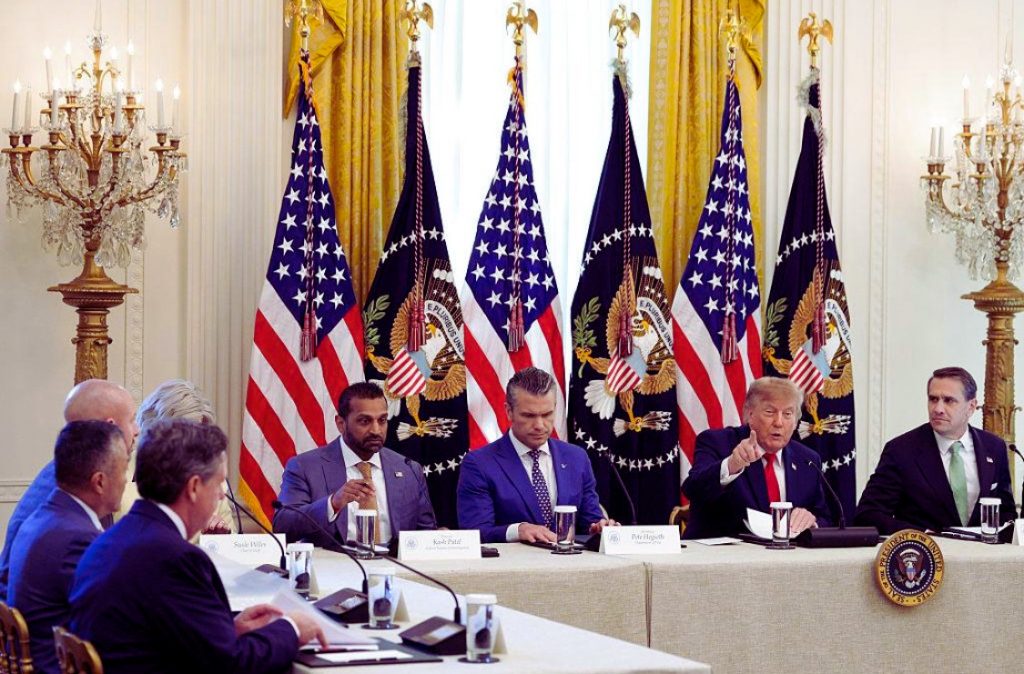
President Donald Trump highlights a US crackdown on cryptocurrency scams, with authorities reporting nearly $1 billion in frozen crypto assets and $1.6 billion in prevented losses.
Key Takeaways
President Donald Trump says federal authorities have frozen nearly $1 billion in cryptocurrency linked to foreign scammers.
The administration claims law enforcement prevented at least $1.6 billion in losses this year.
Authorities say they have warned more than 10,000 Americans targeted by scammers and shut down over 500 fraudulent websites.
The crackdown targets international cybercrime networks, including fraudulent cryptocurrency investment schemes.
The reported figures represent government claims about enforcement and loss prevention, not proof that all frozen assets have been permanently forfeited or returned to victims.
Trump Highlights Major Crypto Crackdown Against Foreign Scammers
President Donald Trump says US federal law enforcement has frozen nearly $1 billion in cryptocurrency linked to foreign scammers and prevented at least $1.6 billion in potential losses this year. He announced the figures during a White House roundtable on October 21, highlighting the administration’s efforts to disrupt cybercrime networks targeting Americans through online fraud and fraudulent investment schemes.
Trump also said authorities had shut down more than 500 fraudulent websites and coordinated with technology companies to disrupt millions of online accounts allegedly used by foreign criminals. The announcement places cryptocurrency-related fraud at the center of a broader federal effort to protect consumers, investigate overseas criminal networks and stop suspicious financial transactions before victims lose their savings.
The figures are significant, but they should be understood as claims made by the administration about its enforcement efforts. A freeze can prevent cryptocurrency from being moved while an investigation proceeds, but it does not necessarily mean the government has permanently confiscated the assets or returned the money to victims.
What the Nearly $1 Billion Crypto Freeze Means
Cryptocurrency is increasingly used in financial fraud because digital assets can be transferred across borders quickly, often through multiple wallets and services. Scammers may direct victims to purchase Bitcoin or other digital assets and send them to wallets controlled by criminal groups, making it difficult for victims to reverse transactions once the funds have moved.
However, blockchain transactions also create records that investigators can analyze. Law enforcement agencies can work with cryptocurrency exchanges, financial institutions, blockchain analytics firms and foreign authorities to identify suspicious transfers, trace funds and seek to freeze assets where the relevant legal mechanisms permit it.
The nearly $1 billion figure cited by Trump highlights the scale of the administration’s stated enforcement effort. It is not the same as $1 billion in recovered cash, because frozen assets may remain subject to investigations, ownership disputes and court proceedings before authorities determine whether they can be forfeited or returned.
The distinction matters to cryptocurrency investors because reports of government seizures can sometimes trigger speculation about whether large quantities of Bitcoin or other tokens will eventually be sold. A freeze alone does not establish that a sale is planned, so the reported amount should not automatically be interpreted as immediate selling pressure across crypto markets.
More Than 10,000 Americans Were Warned About Scams
Trump said federal authorities had warned more than 10,000 Americans who were being targeted by scammers and had prevented at least $1.6 billion in losses this year. The claim points to the importance of intervention before fraudulent transactions are completed, rather than relying exclusively on arrests and asset seizures after money has disappeared.
One established example is the FBI’s Operation Level Up initiative, which identifies people believed to be actively experiencing cryptocurrency investment fraud and alerts them to the suspected scam. In its April 2026 update, the FBI reported that the program had notified more than 8,000 potential victims since its launch and helped reduce estimated losses by more than $500 million.
Many crypto investment scams use a gradual approach. Fraudsters may first contact people through dating apps, social media or messaging platforms, build trust over time and then introduce an investment website that appears to show impressive returns. Victims are encouraged to deposit more money, but withdrawals are blocked or made conditional on additional payments.
These operations can cause severe financial damage because victims may believe their balances are growing even though the displayed profits are fabricated. Early warnings can therefore be crucial, particularly when a person has not yet transferred their savings or borrowed money to fund the supposed investment.
Why Authorities Are Targeting Fraudulent Investment Websites
The shutdown of more than 500 fraudulent websites is another important part of the crackdown. These platforms often imitate legitimate cryptocurrency exchanges, brokerage services or investment companies, using professional-looking dashboards and fake account balances to convince victims that their money is generating profits.
In September 2026, the US Treasury’s Financial Crimes Enforcement Network (FinCEN) reported that financial institutions had filed 33,904 reports involving suspected digital-asset investment scams, representing approximately $12.7 billion in financial activity between September 2023 and December 2025. The agency identified overseas scam centers, particularly those operating in Southeast Asia, as a major concern for US consumers.
That figure requires context: the $12.7 billion represents activity associated with suspicious transactions reported to authorities, not a confirmed total of losses suffered by victims. Nevertheless, it illustrates how extensive the financial networks behind cryptocurrency investment fraud have become.
The Scale of the Crypto Fraud Problem in the US
The administration’s announcement comes as federal agencies continue to report substantial losses associated with online crime. According to the FBI’s 2025 Internet Crime Report, released in April 2026, Americans reported more than $11 billion in losses associated with cryptocurrency complaints across 181,565 complaints. The FBI also reported that total losses from cyber-enabled fraud exceeded $17.7 billion during 2025.
Investment fraud remains particularly damaging because scammers can manipulate victims over weeks or months before requesting larger deposits. The use of cryptocurrency can make the process more complicated for victims, especially when funds are sent to overseas wallets or routed through multiple addresses and services.
These figures also show why enforcement agencies are focusing on prevention, financial intelligence and cooperation with private companies. Shutting down a website or freezing a wallet can disrupt a particular operation, but investigators must often trace the wider network to identify the organizers, accomplices and other assets connected to the scheme.
What the Crackdown Means for Bitcoin and Crypto Markets
For cryptocurrency markets, the immediate implications are more about regulation, investor protection and enforcement than a clear directional signal for Bitcoin prices. Stronger action against fraud could help build confidence among consumers and institutions by demonstrating that cryptocurrency transactions can be investigated and that illicit proceeds may be traced.
At the same time, the announcement does not establish that the nearly $1 billion in frozen cryptocurrency consists entirely of Bitcoin. Nor does it confirm that the government intends to liquidate those assets, so traders should avoid assuming the reported freeze will automatically create selling pressure or trigger a market rally.
The longer-term impact will depend on how effectively authorities dismantle criminal networks and whether they can prevent those groups from rebuilding their operations elsewhere. Cooperation between law enforcement, exchanges, financial institutions and technology companies will remain important because the infrastructure used by scammers often spans multiple countries and platforms.
For investors, the practical lesson is straightforward: verify platforms independently, avoid investment opportunities promising guaranteed returns and be wary of anyone pressuring you to transfer cryptocurrency quickly. Anyone who suspects fraud should preserve transaction records and communications and report the incident to the relevant authorities rather than sending additional money to a supposed recovery service.
Why It Matters
The reported Trump crypto crackdown highlights a growing government focus on the infrastructure supporting online investment fraud. By freezing assets, disrupting fraudulent websites and warning potential victims, authorities are attempting to interrupt criminal activity at several stages rather than relying solely on prosecutions after the money has been lost.
However, the headline figures should not be confused with completed recoveries. The amount frozen, the value of losses reportedly prevented and the money ultimately returned to victims are different measures, and each requires separate evidence to establish the final outcome.
The announcement also reinforces a broader challenge for the cryptocurrency industry: digital assets can be exploited by international criminal groups, but blockchain records can provide investigators with valuable evidence. How effectively authorities use that evidence, cooperate across borders and secure restitution for victims will help determine the lasting impact of the campaign.
