





The IRS says a revamped voluntary disclosure program, with lower penalties and a 120-day target, is due before December.
For years, the IRS’s pitch to people with unreported income has been “come forward, and it will hurt less than if we find you.” Now the agency says it is making the “hurt less” part a lot more appealing.
Jarod Koopman, who heads IRS Criminal Investigation, said the agency plans to launch a revised voluntary disclosure program before December, with lower penalties, faster answers and more flexible ways to pay. He made the remarks at a tax controversy conference hosted by UCLA Extension. Crypto holders are covered, but they are not getting a lane of their own. Here are the questions readers will have, answered one at a time.
What exactly is changing?
Three things, according to Koopman. Penalties will be “substantially lower” than they are now. The IRS is aiming to resolve cases within 120 days. And the agency is considering letting people settle what they owe through installment plans or offers in compromise.
He did not put numbers on the penalty cuts. That is the single biggest gap in the announcement, because “lower” means very different things at 10% and at 40%.
How fast is “fast”?
Today the process can take a year or longer, Koopman acknowledged. The new target is 120 days, but note the fine print: the clock starts after a taxpayer completes the required submission process, not on the day they first call. Anyone planning to use the program will likely need clean, complete filings ready to go, because the speed gain depends on it.
Does crypto get its own program?
No. Koopman said digital assets will go through the same voluntary disclosure procedure as other kinds of tax noncompliance. So a holder with unreported crypto gains and a holder with unreported foreign income would follow the same path.
A separate crypto-specific route is being debated in Congress. Section 502 of the Digital Asset Tax Certainty Act would create a correction procedure with defined penalties, aimed at people who made unintentional reporting mistakes. The bill cleared the House Ways and Means Committee in September. It is not law, and it still has to pass both chambers. The House version would charge lower penalties to early filers and require applicants to certify their errors were not fraudulent or willful.
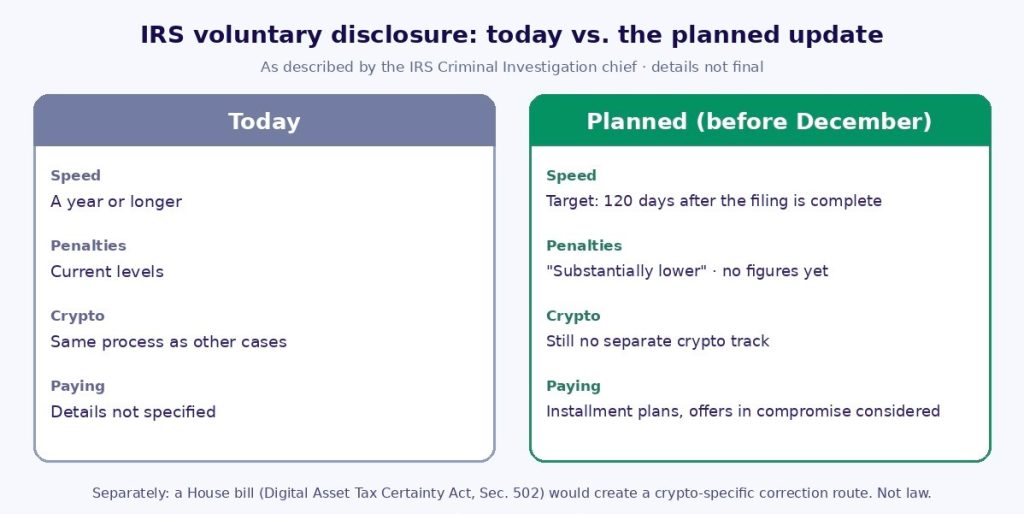
How the IRS describes today’s voluntary disclosure process versus the planned update.
Who is this really for?
This is where readers should slow down. The IRS’s existing voluntary disclosure program mainly targets willful noncompliance, meaning people who knew they owed and didn’t file. A person who simply got confused about how to report a token swap is a different case, which is why Congress is considering its own, gentler track for honest mistakes.
The IRS has not yet said who will qualify under the new rules. Disclosure programs of this kind generally work only if the taxpayer comes forward before the agency has opened its own inquiry, so timing matters. Whether the new version keeps that rule is one of the details to watch.
Why now?
The policy sits inside a wider tightening around crypto and taxes. Exchanges are now sending standardized reports to the IRS, which makes unreported activity easier to spot than in earlier years. A cheaper, quicker confession program gives the agency a way to bring people into compliance without years of litigation, and it gives taxpayers a reason to act before a letter arrives.
We would add a caution of our own. An agency announcing it wants to be generous is not the same as publishing the rules. Until the program is published, the specifics, including eligibility, penalty rates and payment terms, remain promises.
What we still don’t know
- The actual penalty percentages.
- Who is eligible, and whether people with honest mistakes can use it.
- How installment plans and offers in compromise will work in practice.
- Whether the program really launches before December.
- Whether Congress will pass the separate crypto-specific correction route.
Before you act
If you think you have unreported crypto activity, the practical step is to talk to a qualified tax professional now rather than wait for a headline to settle it. They can tell you whether the current program, the planned one or a simple amended return fits your situation, and what the deadlines look like. This article is for information only and is not tax or legal advice.