





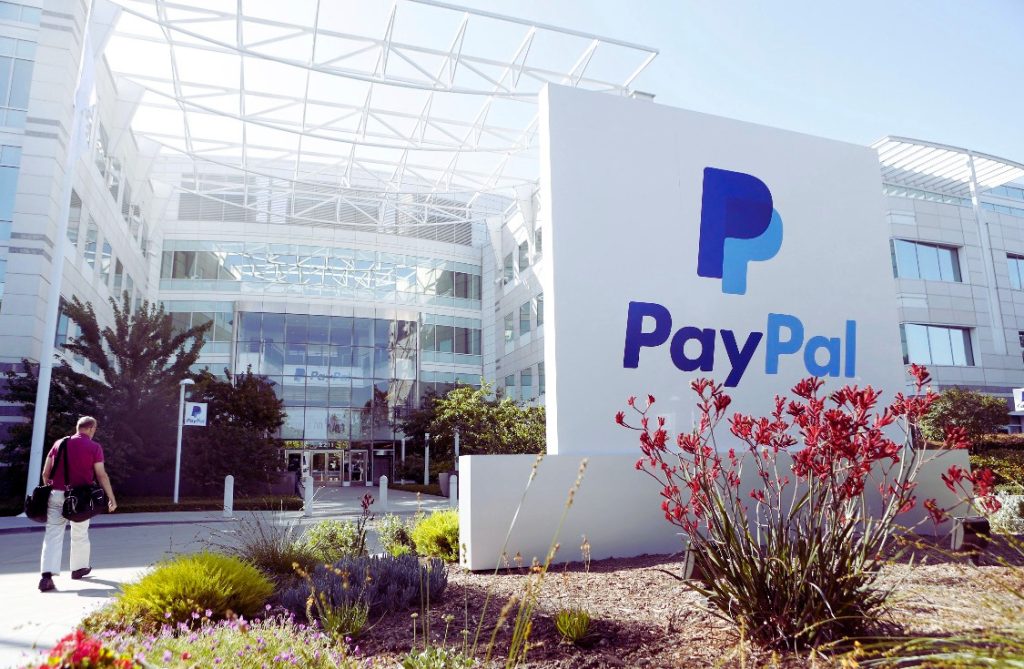
PayPal is expanding its cryptocurrency strategy through stablecoins, AI-powered payments and biometric identity technologies.
Key Takeaways
• PayPal is expanding into stablecoins, AI-powered payments and biometric identity tools.
• The company disclosed an $81 million crypto-related earnings adjustment during the second quarter.
• PayPal continues investing in blockchain infrastructure despite short-term accounting volatility.
• Investors will watch future adoption of PayPal USD (PYUSD) and other blockchain payment services.
PayPal is expanding its cryptocurrency strategy by increasing its focus on stablecoins, agentic payments, and biometric identity technologies, signaling that blockchain remains an important part of the company’s long-term payments strategy.
The announcement came alongside PayPal’s second-quarter financial update, which included an $81 million crypto-related earnings adjustment. While the accounting impact drew attention, the broader story is the company’s continued investment in digital asset infrastructure and emerging payment technologies.
PayPal Deepens Its Crypto Strategy
PayPal has steadily expanded beyond traditional online payments into digital assets, blockchain infrastructure, and tokenized financial services.
Rather than positioning cryptocurrency as a standalone business, the company is increasingly integrating blockchain technology into its broader payments ecosystem.
Stablecoins, artificial intelligence, and digital identity verification are expected to play increasingly important roles as digital commerce evolves.


Stablecoins Become a Bigger Focus
Stablecoins have emerged as one of the fastest-growing segments of the cryptocurrency industry because they combine blockchain technology with price stability.
PayPal entered the market with its U.S. dollar-backed stablecoin, PayPal USD (PYUSD), and continues expanding its use cases for payments, transfers, and digital commerce.
Growing institutional interest in regulated stablecoins has made them one of blockchain’s most widely adopted financial products.
AI and Biometric Payments
Artificial intelligence is also becoming an increasingly important part of digital payments.
PayPal’s plans include expanding into agentic payments, where AI systems can initiate transactions on behalf of users under predefined rules.
Combined with biometric identity verification, these technologies could improve payment security while making online transactions faster and more convenient.


Artificial intelligence and biometric authentication are expected to play a growing role in digital payments.
Understanding the $81 Million Adjustment
PayPal also reported an $81 million crypto-related earnings adjustment during the second quarter.
Accounting adjustments connected to digital assets do not necessarily indicate operational losses. Instead, they often reflect changes in valuation methods, accounting standards, or how cryptocurrency holdings are reported in financial statements.
Investors typically separate these accounting impacts from the company’s long-term blockchain strategy.
What Investors Should Watch
Market participants will continue monitoring several developments over the coming quarters, including:
- Adoption of PayPal USD (PYUSD)
- Expansion of stablecoin payment services
- Development of AI-powered payment systems
- Growth in biometric authentication tools
- Future crypto-related financial disclosures
These indicators will help investors assess how successfully PayPal transforms its blockchain strategy into long-term business growth.
PayPal’s latest update demonstrates that the company continues investing in blockchain technology despite reporting an $81 million crypto-related earnings adjustment during the second quarter.
By expanding into stablecoins, AI-powered payments, and biometric identity technologies, PayPal is positioning itself for a future in which digital assets become increasingly integrated into mainstream financial services.
PayPal Expands Stablecoin Strategy, AI Payments and Biometric ID After $81M Crypto Adjustment
