





New York warns that AI is making investment scams harder to spot as reported U.S. losses topped $8 billion in 2025, up 38% from 2024.
Key Takeaways
- New York officials are warning consumers about increasingly sophisticated AI investment scams.
- U.S. consumers reported more than $8 billion in investment scam losses during 2025, according to FTC data cited by New York.
- The reported losses rose 38% from 2024, with the median reported loss reaching $10,560.
- Scammers are using AI-generated voices, deepfake videos, fake celebrity endorsements and convincing trading platforms.
- Fake cryptocurrency projects are among the schemes being used to persuade victims to send money.
New York Issues Warning Over AI Investment Scams
New York officials are sounding the alarm over a growing class of fraud in which artificial intelligence is being used to make fake investment opportunities appear legitimate. The state’s Division of Consumer Protection issued a consumer alert on August 26, warning that scammers are using increasingly convincing digital content to target people looking for ways to grow their money.
The figures cited in the warning underline the scale of the problem. According to Federal Trade Commission data, 144,041 consumers reported losing more than $8 billion to investment scams in 2025, a 38% increase from the previous year. The median reported loss was $10,560, making investment fraud the costliest category tracked by the FTC that year.
Importantly, the $8 billion figure does not represent AI scams alone or losses suffered specifically by New York residents. It covers reported investment-scam losses across the United States. New York is using the national figures to highlight how AI is giving fraudsters new tools to make established investment scams more convincing.
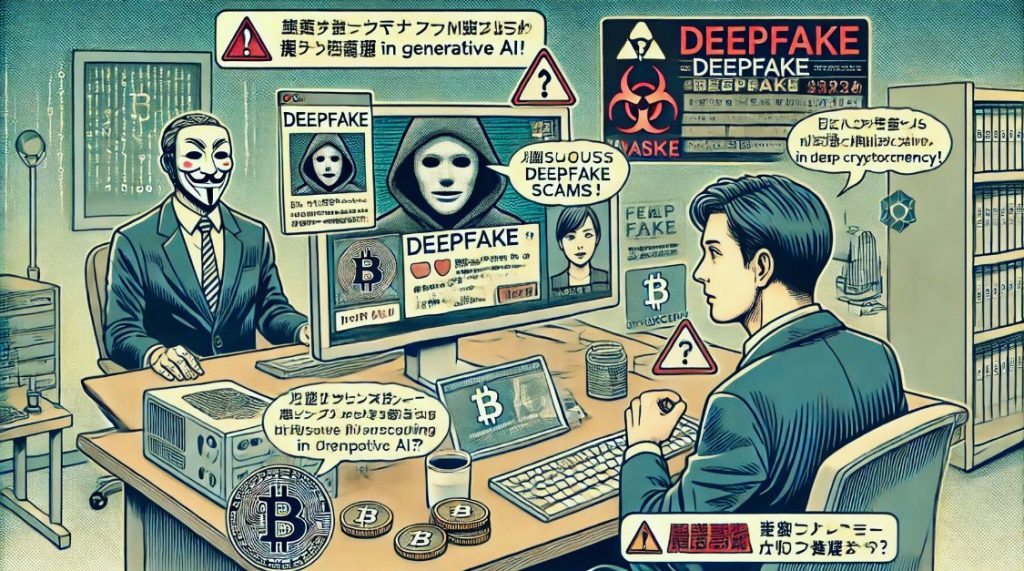

AI-generated voices, videos and fake investment platforms are making fraudulent cryptocurrency and financial schemes harder for consumers to identify.
Illustration showing artificial intelligence and deepfake technology being used in cryptocurrency investment scams.
How AI Makes Fake Investments Look Real
The underlying scam is not necessarily new. What has changed is the ability to manufacture convincing evidence of legitimacy at scale.
New York officials say criminals can use AI-generated faces and voices, deepfake videos, celebrity impersonations and phishing messages to persuade potential victims that an investment opportunity is genuine. Fraudsters can also build professional-looking websites and applications showing fabricated account balances, trading activity and investment returns.
In some cases, scammers allow victims to make a small withdrawal. That early success can create confidence before the victim is encouraged to deposit substantially more money. When the larger withdrawal is requested, the platform may suddenly demand additional fees or payments.
That approach is particularly dangerous in cryptocurrency because victims can be persuaded to send funds directly to wallets controlled by criminals. Once a crypto transaction has been confirmed, recovering the money can be difficult.
Fake Crypto Projects Add Another Layer
New York’s warning specifically identifies fake cryptocurrency projects as one of the tactics being used. Scammers may impersonate established companies or create supposedly legitimate crypto opportunities around coins and tokens that have no real underlying market.
A polished website, social-media following or apparent endorsement does not establish that a token or investment is legitimate. Authorities recommend independently checking the company, investment and destination of the money rather than relying on information supplied by the promoter.
This is where AI investment scams become particularly concerning for the cryptocurrency industry. A fraudster can combine a deepfake endorsement with a fabricated news article, a professional website and a fake trading dashboard, creating several pieces of apparent evidence that all point toward the same false opportunity.
Relationship Scams Can Take Weeks to Develop
Not every scheme begins with an obvious advertisement. New York officials also highlighted relationship investment scams, which can start with an unexpected text message, social-media contact, dating-app match or online friendship.
The scammer may spend considerable time building trust before mentioning investments. They can then claim to have discovered a profitable strategy or offer supposed insider information, eventually directing the victim toward a fake platform.
The combination of personal trust and fabricated financial evidence can make these schemes especially difficult to recognize. Authorities warn that guaranteed returns, pressure to invest immediately and requests to move conversations into private messaging apps are important warning signs.
Why the Warning Matters for Crypto Investors
The warning comes as artificial intelligence becomes more accessible, lowering the technical barriers for creating convincing fraudulent material. The issue is therefore broader than any individual cryptocurrency or trading platform.
For legitimate crypto businesses, widespread AI-enabled fraud could make consumers more skeptical of online promotions and increase the importance of independent verification. For investors, it reinforces a basic principle: a convincing video, voice recording or website is not proof that an investment exists.
New York advises consumers to verify the person promoting an opportunity, the company behind it, the investment itself and where their money will ultimately go. It also recommends using independently sourced contact information rather than relying on links or phone numbers provided by a promoter.
What Investors Should Watch Next
Regulators are likely to face increasing pressure to address scams that combine artificial intelligence with cryptocurrency, social media and private messaging. Meanwhile, consumers will need to become more cautious about treating digital content as evidence of authenticity.
Anyone who believes they have fallen victim to an investment scam should stop sending money, avoid paying additional fees to release supposedly trapped funds, contact their financial institution and preserve relevant messages and transaction records. New York says suspected scams can be reported to the FTC, FBI Internet Crime Complaint Center, SEC and state authorities.
The biggest lesson is that verification has to happen outside the scammer’s own information network. If the advertisement, website, customer-support account and supposed endorsement all originate from connected sources, they may simply be different parts of the same deception.
Conclusion
New York’s warning highlights how AI investment scams are evolving from simple fraudulent pitches into sophisticated operations capable of manufacturing entire investment experiences. More than $8 billion in reported U.S. investment-scam losses during 2025 shows the financial stakes, although that figure should not be interpreted as losses caused specifically by AI.
For cryptocurrency users, the warning is a reminder to verify the person, company, investment and receiving wallet independently before sending funds. As AI makes fake opportunities increasingly convincing, skepticism and independent verification are becoming more important than ever.
