





Bitcoin security is back in the spotlight after Blockstream CEO Adam Back argued that cryptocurrency institutions should reconsider how they protect digital assets, insisting that the solution may be simpler than many companies think: keep the assets offline.
His comments came as Blockstream announced a new institutional custody solution developed in partnership with French technology company Thales. The system combines specialized hardware security with advanced cryptographic technology, aiming to protect sensitive signing operations from potential cyberattacks.
Back pointed to the reported $6.3 billion Binance security breach as an example of why institutions should pay closer attention to their custody architecture. His message was straightforward: complexity can introduce vulnerabilities, and keeping signing infrastructure offline can reduce exposure to attackers.

Blockstream CEO Adam Back, who is advocating simpler security approaches for institutional Bitcoin custody.
Adam Back Says Bitcoin Custody Should Return to Basics
Speaking to Cointelegraph, Back questioned the security assumptions behind conventional Multi-Party Computation (MPC) custody systems. Although MPC is designed to distribute signing authority across multiple parties or devices, he argued that some implementations are too complicated and interactive to work effectively in fully offline environments.
“When people talk about MPC, they’re talking about some very esoteric and complicated protocols that are hard to secure and are very interactive. So you can’t really use them in a cold storage setting,” Back explained.
His argument centres on reducing the number of systems and connections that attackers could potentially exploit. Internet-connected infrastructure may have firewalls, authentication systems and other security measures, but those protections do not necessarily eliminate the possibility of unauthorized access.
Back believes institutions should reconsider whether increasingly complicated custody arrangements actually improve security or introduce additional vulnerabilities.
His most direct recommendation was captured in his statement: “Complexity is the enemy of security. And going back to basics is the answer, you know, just cold-store it.”
Blockstream and Thales Launch New Institutional Custody System
The discussion around offline security coincides with Blockstream’s November 13 announcement of a new enterprise custody solution developed alongside Thales, a global technology and cybersecurity company.
The solution integrates Thales’ Hardware Security Modules with Blockstream’s Secure-MPC technology. According to Blockstream, the system keeps the entire transaction-signing protocol inside the protected environment of the hardware security modules rather than allowing sensitive cryptographic operations to take place on general-purpose computing systems.
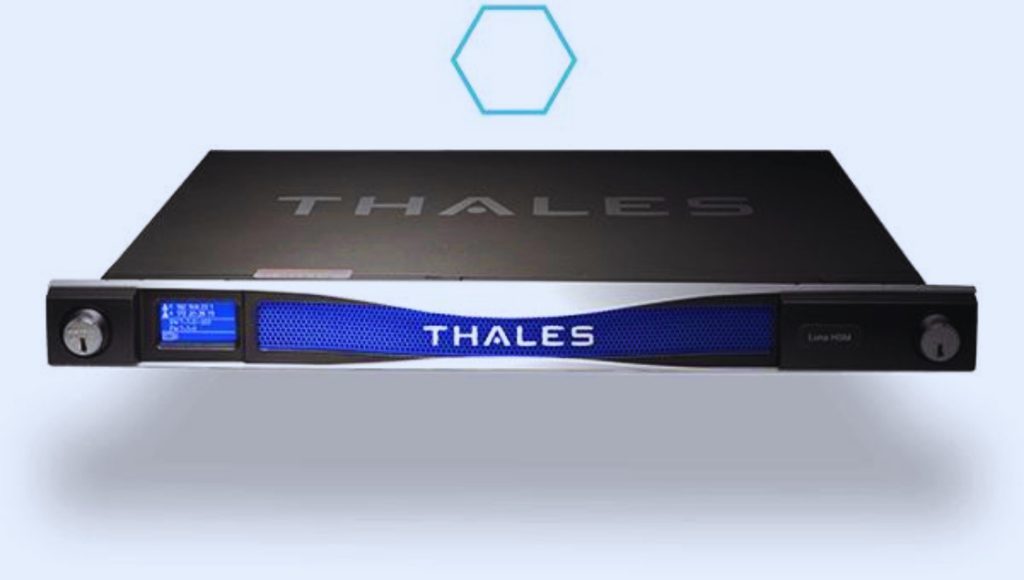
Hardware Security Modules provide protected environments for sensitive cryptographic operations.
How the New Secure-MPC System Works
Hardware Security Modules are specialized devices designed to protect cryptographic keys and perform sensitive security operations. They are commonly used in financial infrastructure, payment processing and other environments where protecting digital credentials is essential.
Blockstream’s approach combines this hardware protection with MPC, which distributes signing authority rather than relying on one party holding complete control of a private key.
The important difference is where the signing process takes place. Blockstream says its Secure-MPC implementation executes the entire signing protocol within Thales’ protected HSM environment, keeping sensitive key material protected throughout the transaction lifecycle, including during signing.
The partnership builds on an existing two-year relationship between the companies. Blockstream President and Chief Operating Officer Michael Minkevich described the launch as an important step toward providing institutional-grade infrastructure for organizations integrating Bitcoin into their financial operations.
However, one distinction is important: Blockstream’s announcement confirms hardware-protected signing, but does not establish that every component of the new custody system is completely air-gapped or disconnected from networks. The precise network architecture and deployment arrangements have not been fully detailed publicly.
Binance’s $6.3 Billion Hack Raises Questions About Custody Security
Back used the reported Binance security breach to illustrate why internet-connected custody infrastructure deserves greater scrutiny.
According to the reporting, attackers compromised employee devices and obtained credentials that gave them access to Binance’s wallet-signing infrastructure. The incident demonstrated how vulnerabilities involving internal devices and authentication systems can potentially expose sensitive cryptocurrency operations.
Binance and cryptocurrency exchange security have become central topics in discussions about institutional custody risks.
Back argued that even systems protected by firewalls can remain vulnerable if attackers gain access to internal networks or credentials that should remain restricted.
His concern is that protecting private keys is not simply about preventing someone from stealing a password. Institutions must also consider every device, employee account, software component and communication channel involved in authorizing transactions.
Cold storage attempts to reduce this exposure by keeping signing equipment offline when it is not needed for transaction authorization.
For institutions managing substantial Bitcoin reserves, that approach could help reduce the number of potential entry points available to attackers.
Adam Back Warns AI Could Make Crypto Security More Difficult
Another concern raised by Back is the growing capability of artificial intelligence.
While AI is increasingly being used to improve cybersecurity, it can also assist malicious actors in identifying weaknesses in software and cryptographic implementations.
Back warned that AI tools could help hackers discover small implementation errors in complicated MPC systems, including flaws that might escape conventional human reviews.

AI-assisted vulnerability discovery is becoming an important consideration for digital asset security.
This creates a difficult situation for cryptocurrency custodians. As security systems become more sophisticated, their underlying software and operational processes may also become harder to audit and maintain.
Back believes institutions should adapt by reducing unnecessary complexity and keeping valuable digital assets away from internet-connected systems wherever possible.
His warning does not mean that MPC technology is inherently unsafe. Rather, it highlights the importance of implementation quality, hardware protection and carefully designed operational procedures.
Why It Matters for Bitcoin and Institutional Investors
The Blockstream-Thales partnership arrives as institutional participation in Bitcoin continues to increase, bringing greater attention to the infrastructure used to store and manage digital assets.
For investment firms, exchanges, banks and other organizations holding substantial cryptocurrency reserves, custody security is just as important as market exposure. A successful attack on private-key infrastructure can result in significant losses, even when the underlying blockchain itself remains secure.
The new Secure-MPC solution offers another approach to institutional custody by combining distributed signing authority with hardware-level protection. If successfully adopted, it could encourage other custody providers to reconsider how they protect transaction-signing operations.
The AI security warning adds another dimension. As attackers gain access to increasingly capable tools, institutions may need to reassess whether their existing security architecture can withstand more sophisticated attacks.
Ultimately, Back’s argument is that better security does not always mean adding more layers of software. Sometimes, reducing connectivity and simplifying the architecture can be equally important.
Conclusion
Adam Back’s call for simpler Bitcoin security comes at a time when institutional cryptocurrency custody is facing increasingly sophisticated threats. His argument is that keeping valuable assets offline and reducing unnecessary complexity could help prevent some of the vulnerabilities associated with connected infrastructure.
Blockstream’s partnership with Thales provides a practical development in that direction, combining hardware security with distributed cryptographic signing. While the system’s full deployment architecture and real-world security performance remain to be demonstrated, the launch highlights the growing importance of hardware-protected custody.
As artificial intelligence continues to change the cybersecurity landscape, institutions may need to rethink how they protect digital assets. For Back, the message remains simple: sometimes, the strongest security measure is to keep the keys offline.