






Key Takeaways
OKX CEO Star Xu has raised concerns about recent cryptocurrency market weakness and Binance’s possible involvement in selling pressure.
Xu suggested Binance could be among the players pushing the market lower, despite claims that the exchange has not sold tokens.
Binance previously said it was purchasing replacement assets to cover losses from its October 29 security breach.
On-chain data shows substantial movements in Binance-labelled wallets, but wallet transfers alone do not establish that assets were sold.
The public disagreement adds another layer of tension between two of the cryptocurrency industry’s largest exchanges.
A fresh disagreement between two major cryptocurrency exchanges is emerging as OKX CEO Star Xu questions Binance’s claims about its token holdings amid continued weakness across the digital asset market.
In a statement circulating on X, Xu said the market was clearly being pushed lower and suggested Binance could be one of the participants contributing to the selling pressure. His comments have reignited questions about whether Binance has been selling cryptocurrency assets despite statements denying meaningful selling activity.
The allegations are particularly sensitive because Binance is still dealing with the aftermath of its reported $6.3 billion security breach in October. However, Xu’s suggestion remains an allegation, not proof that Binance has deliberately sold tokens to suppress cryptocurrency prices.

OKX founder and CEO Star Xu, who has questioned Binance’s possible role in recent cryptocurrency market selling pressure.
Star Xu Suggests Binance Could Be Contributing to Selling Pressure
The comments attributed to Xu are particularly notable because they go beyond the usual criticism exchanged between competing cryptocurrency platforms.
In the circulating statement, the OKX chief said he had repeatedly discussed the market’s weakness over recent days. He argued that cryptocurrency prices appeared to be deliberately pushed lower and suggested Binance could be one of the participants responsible.
His comments also challenge the credibility of Binance’s position that it has not been selling assets. However, the screenshot does not include a direct link to the original X post, and the precise wording and context should be checked against Xu’s original account before treating the allegation as a verified quotation.
The disagreement comes after several weeks of tension between the executives of the two exchanges, particularly following Binance’s October security incident.
Why Binance’s Token-Selling Claims Are Under Scrutiny
The controversy is connected to Binance’s response to its October 29 security breach, which affected approximately $6.34 billion in digital assets.
Following the incident, Binance said it would absorb the financial losses rather than pass them on to customers. The exchange also committed corporate resources and its Secure Asset Fund for Users (SAFU) to replenish affected cryptocurrency balances.
One detail has attracted particular attention. Binance co-founder Yi He previously said the exchange was purchasing replacement tokens using holdings that included substantial amounts of Bitcoin and Ethereum. On November 2, Changpeng Zhao separately stated that Binance had not sold assets.
Those statements have prompted questions about how Binance financed its recovery operations and whether any of its existing cryptocurrency holdings were converted to fund the replenishment process.
The distinction is important: purchasing replacement tokens using existing holdings does not necessarily mean Binance sold Bitcoin on the open market. It could involve internal transfers, asset swaps or over-the-counter transactions.
Nevertheless, the exchange has not publicly provided a complete breakdown of whether any Bitcoin was converted as part of the process.
On-Chain Data Adds Another Layer to the Controversy
Blockchain analytics have provided additional information about Binance’s wallet movements, although interpreting those movements requires caution.
A November 14 research report from TON618 Capital examined Binance’s disclosed wallet balances, Bitcoin holdings and stablecoin movements following the October incident.
The report found that Binance-labelled wallets held approximately 644,676 BTC on November 13, compared with 640,832 BTC on October 4. That represented a 0.6% increase over the period, rather than a decline in disclosed Bitcoin holdings.
However, the same research found that stablecoin balances in Binance-labelled wallets fell from approximately $53 billion to $41.3 billion. The report cautioned that these movements could reflect customer withdrawals, the security incident and reimbursement activity, rather than proving that Binance sold cryptocurrency.
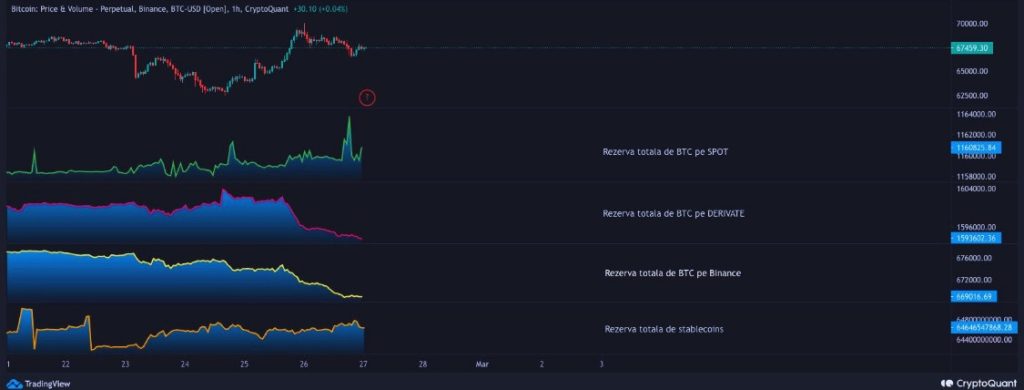
Binance Bitcoin reserves and blockchain wallet activity have become central to discussions about the exchange’s asset movements.
The research also highlighted a limitation in public blockchain analysis: wallet balances combine customer assets with exchange-controlled holdings. Transactions between wallets cannot automatically be classified as market sales.
As a result, the available data does not establish that Binance deliberately dumped Bitcoin or other tokens to push prices lower.
Bitcoin’s Decline Intensifies Questions About Market Manipulation
The disagreement comes during a difficult period for cryptocurrency investors, with Bitcoin experiencing significant losses and broader market sentiment weakening.
According to TON618 Capital’s November 14 research, Bitcoin had fallen approximately 21.3% between October 4 and November 13, declining from around $86,521 to $68,096. It subsequently fell further, closing November 14 at approximately $63,821.
The research identified several possible contributors to the decline, including higher interest-rate expectations, selling by long-term holders, withdrawals from Bitcoin investment funds and leveraged futures liquidations.
It also recorded approximately $1.47 billion in cryptocurrency positions liquidated over the 24 hours leading up to November 13, with most of those positions being bullish bets.
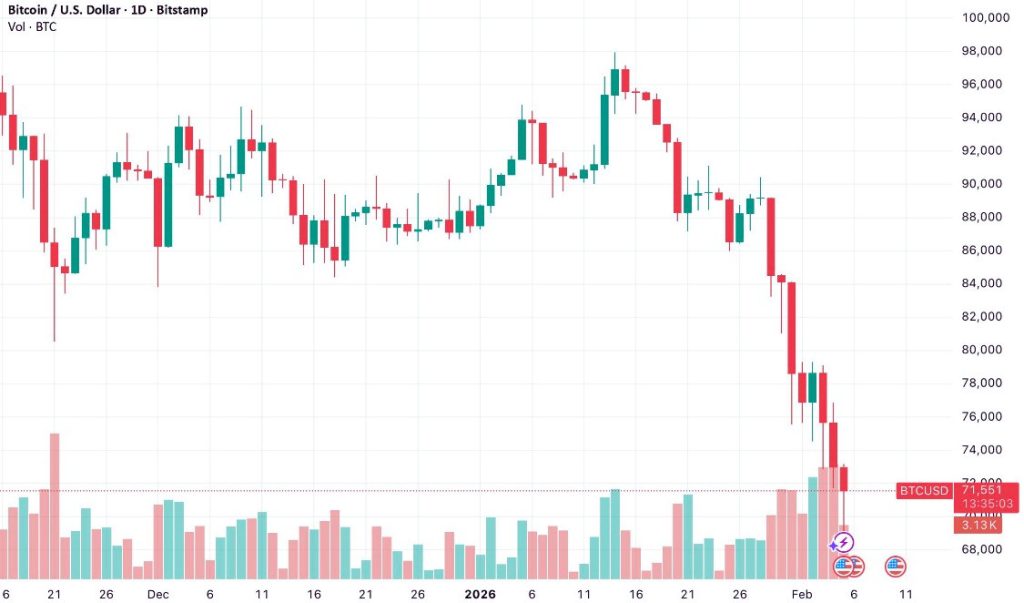
Bitcoin’s recent decline has intensified debate about selling pressure, market liquidity and leveraged liquidations.
While these developments help explain the pressure facing the market, they do not independently demonstrate that a particular exchange deliberately engineered the decline.
The research specifically found insufficient evidence to establish Binance as a major seller responsible for the market downturn. It also noted that intentional market manipulation could not be established from price movements alone.
Binance Faces Pressure to Provide Greater Transparency
The controversy could increase pressure on Binance to provide more detailed information about its asset movements and recovery strategy.
On November 14, Reuters reported that Binance had reopened withdrawals across 87 networks and was targeting the restoration of withdrawals for all remaining networks and assets by the end of the following week.
The exchange also said it had covered approximately 95% of the stolen assets and remained committed to compensating affected customers.

Binance continues working to restore normal exchange operations following its October security breach.
Providing a detailed breakdown of the assets used to replenish affected balances could help address some of the questions surrounding the exchange’s transactions.
For investors, the issue is not simply whether Binance sold Bitcoin. It is whether major exchanges provide sufficient transparency when making substantial movements involving customer funds, corporate reserves and emergency insurance resources.
Why It Matters
The public disagreement between OKX and Binance highlights a broader challenge facing the cryptocurrency industry: maintaining trust during periods of market instability.
Both exchanges occupy important positions in global cryptocurrency trading. When executives publicly question one another’s actions, investors may become more concerned about exchange reserves, liquidity and the possibility of undisclosed selling activity.
The controversy also demonstrates why blockchain transparency matters. Public wallet data can help investors track asset movements, but interpreting those movements requires additional information about ownership, internal transfers and the purpose of each transaction.
For Bitcoin investors, the most important development will be whether Binance provides further clarification about its asset-replenishment strategy and whether additional evidence supports the allegations raised by Xu.
Until then, claims that Binance deliberately pushed cryptocurrency prices lower should be treated as unverified.
Conclusion
The latest comments attributed to OKX CEO Star Xu have added another dimension to the ongoing debate surrounding Binance, exchange transparency and Bitcoin’s recent market weakness.
While Xu appears convinced that major market participants could be contributing to the selling pressure, his suggestion that Binance may be involved remains unproven. Available blockchain research also presents a more complicated picture, showing that Binance’s disclosed Bitcoin holdings increased over the period examined even as its stablecoin balances declined.
With Binance still completing its recovery operations following the October security breach, further transparency could help settle questions about its asset movements.
For now, investors should distinguish between public accusations, verified blockchain transactions and confirmed market activity. The crypto industry needs evidence and accountability rather than speculation, particularly when confidence in major exchanges is already under pressure.
